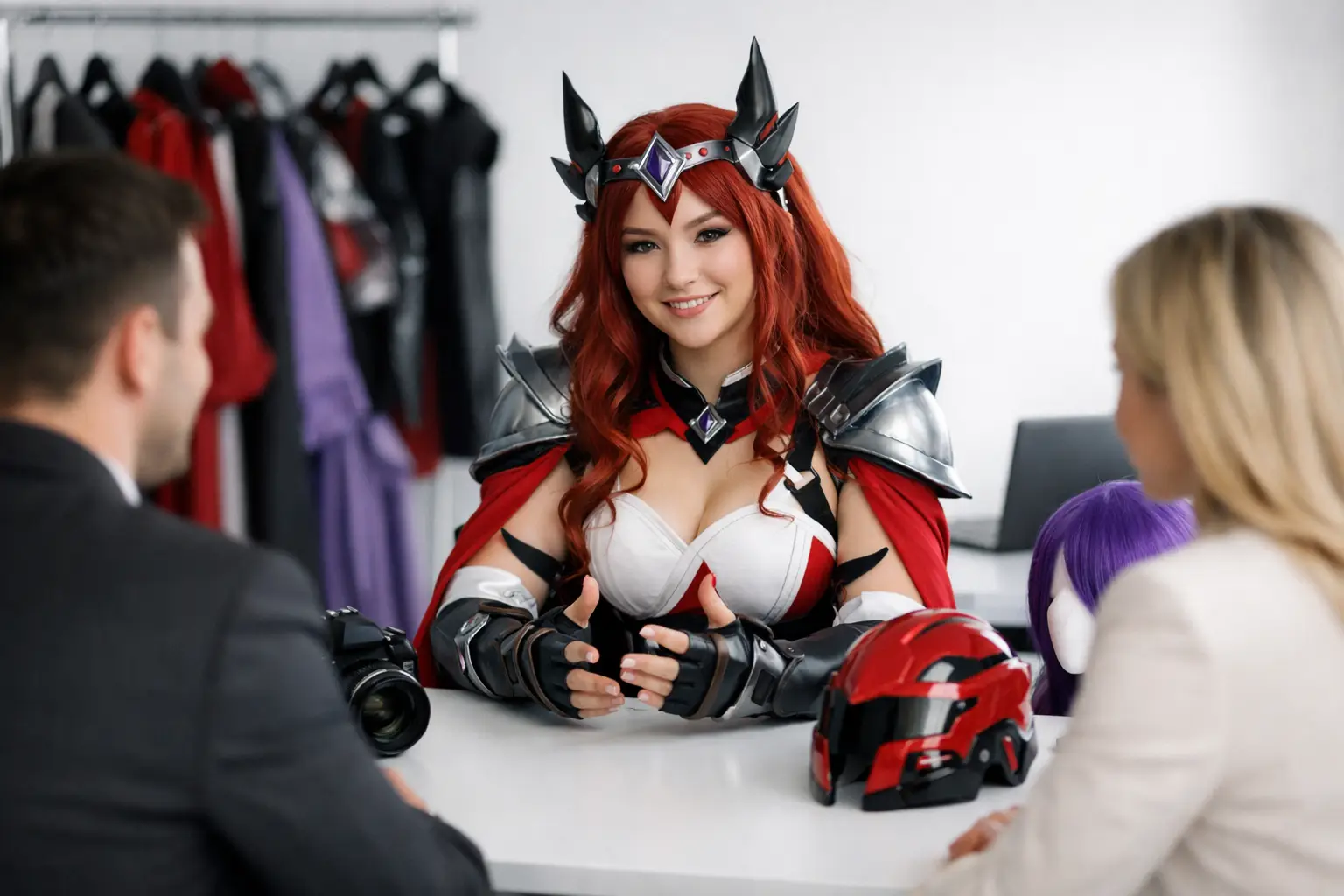
Getting ignored by brands usually is not a cosplay problem. It is a positioning problem.
If you are trying to figure out how to get cosplay sponsorships, the biggest shift is this: brands do not sponsor effort alone. They sponsor audience fit, consistency, trust, and proof that your content can move attention in the right niche. A great build helps, but a sponsor is buying more than craftsmanship. They are buying relevance.
How to get cosplay sponsorships without looking desperate
A lot of creators start by mass messaging companies with a generic intro, a follower count, and a few mirror selfies in costume. That approach usually fails because it gives a brand no reason to care. Sponsorships happen when your page already answers three questions before anyone asks them: who are you, who is your audience, and why does your content make sense for this product?
For cosplay creators, that means your profile cannot feel random. If one week you post elite armor builds, the next week soft e-girl selfies, and the week after a gaming meme dump, a brand may like your style but still have no idea what they would be sponsoring. Variety is not the issue. Lack of a clear commercial identity is.
Your identity does not need to be mainstream to be sponsor-friendly. In fact, niche is usually stronger. A creator with a defined cosplay lane, strong alt styling, and a loyal audience often has more sponsor value than someone with bigger numbers and no point of view.
Build a sponsor-ready cosplay brand first
Before you pitch anyone, clean up the basics. A sponsor-ready creator brand looks intentional from the outside. Your bio should say what you do in plain language. Your feed should make your niche obvious within a few seconds. Your audience should be able to tell whether you focus on anime cosplay, gaming characters, gothic reinterpretations, lewder premium content, convention culture, tutorials, or transformation content.
That does not mean becoming corporate. It means becoming legible.
Brands need a shortcut to understand your value. If your content sits at the intersection of cosplay and alt beauty, say that. If your audience overlaps with gaming, collectibles, wigs, contact lenses, lingerie, or creator platforms, make that visible through your content mix. The right sponsors are not looking for a generic influencer. They are looking for someone whose aesthetic already matches the product.
There is also a difference between having followers and having usable influence. A page with 20,000 engaged followers in a tight cosplay niche can outperform a page with 100,000 passive followers. Comments, saves, story replies, click behavior, repeat viewers, and audience trust matter more than inflated vanity metrics.
What brands actually want from cosplay creators
Most sponsorship advice makes this sound mystical. It is not. Brands usually want one of four things: visibility, conversions, social proof, or access to a subculture they do not naturally understand.
Cosplayers are especially valuable when they give a product context. A wig looks different when styled for a specific character. Makeup performs differently when tested under convention wear, studio lights, or long-form content creation. Lingerie, shapewear, accessories, tech gear, gaming products, and beauty brands all benefit when a creator makes the product feel part of a real aesthetic rather than a flat ad.
That said, not every brand fit is a good fit. If a company wants your audience but does not respect your identity, the deal can weaken your page. This is where a lot of creators go wrong. They chase any offer because it feels like validation. But low-alignment sponsorships often underperform, look forced, and make future premium deals harder to secure.
The best sponsorship is not just paid. It makes sense on your page.
How to get cosplay sponsorships by pitching smarter
Outreach still matters, especially when you are growing. But your pitch needs to read like a business introduction, not a fan message asking for free stuff.
Start with relevance. Mention why the brand fits your niche specifically. Then show the angle. Maybe your audience responds well to transformation reels, behind-the-scenes costume prep, try-on styling, unboxings, convention packing content, or premium character-inspired shoots. Give them a real use case so they can picture the campaign.
Keep it concise. You do not need a dramatic personal story or a paragraph about how much you love the brand. You need a sharp introduction, a clear audience description, a few useful metrics, and a simple proposal.
A strong pitch usually covers your niche, your audience location, your engagement quality, the kind of content you make, and what type of partnership you are open to. If you have any proof of past results, include it. Even small wins count if they are relevant. If a code converted well, if a reel outperformed your average, or if your audience heavily engages with product-based content, say so.
Do not ask for sponsorships as if the brand is doing you a favor. Present yourself as a creator with a defined audience and a clear commercial fit.
Your media kit matters more than you think
If you want better deals, your media kit should stop looking like a school project.
A strong media kit is not packed with fluff. It should quickly show your visual identity, audience demographics, engagement snapshots, content strengths, and partnership options. For cosplay creators, it helps to include a few examples that show range without making your brand feel scattered. Show the content style you want to be booked for.
This is also where premium positioning starts. Clean design, current stats, and a clear rate framework signal that you understand your value. You do not need to list every possible deliverable. But you should make it easy for a brand to understand what working with you looks like.
If you create both public social content and subscription-based content, be strategic about how you present that. Some brands will care about your broader creator ecosystem because it shows monetization strength and audience loyalty. Others will only want social-facing placements. It depends on the category, and that is exactly why your positioning needs to be controlled.
For creators in alt spaces, professional representation can make a real difference here. Agencies like Beyond Caption exist because niche talent is often commercially strong but poorly packaged by the market. Good management does not erase your identity. It protects it while making it bookable.
Start smaller if you want bigger deals later
There is nothing wrong with starting with affiliate partnerships, gifted product, or smaller paid campaigns if they are strategically chosen. The mistake is staying there too long or accepting terms that undervalue your work.
Early-stage sponsorships are useful when they give you case studies. If a smaller wig brand, indie accessory label, or beauty company lets you prove that your audience clicks, buys, comments, and saves, that becomes leverage for larger pitches later.
But be selective. Free product is not automatically compensation. If a brand expects polished content, usage rights, exclusivity, or multiple deliverables, they need a budget. Exposure is not a rate.
The creators who build strong sponsorship income are usually not the ones saying yes to everything. They are the ones who understand which early deals build momentum and which ones just consume time.
Common mistakes that kill cosplay sponsorship potential
One of the biggest mistakes is inconsistent presentation. If your visuals, captions, and content quality swing wildly, a brand will assume the partnership result will too. Another issue is weak audience clarity. If you cannot explain who follows you and why, a sponsor cannot justify the spend.
There is also the problem of underpricing from insecurity. Many alternative creators lowball themselves because they assume brands see them as too niche, too edgy, or too outside the mainstream. In reality, niche audiences often convert better because they are more identity-driven. The goal is not to be for everyone. The goal is to be commercially undeniable for the right category.
On the other side, some creators overestimate readiness. If your engagement is thin, your page is visually messy, and you have no examples of product integration, it may be too early for premium outreach. That is not failure. It just means the next step is building proof, not forcing deals.
The sponsorships worth having are built on fit
If you want to know how to get cosplay sponsorships that last, think beyond the first yes. The best partnerships come from alignment between your image, your audience, and the brand's goal. When that alignment is real, your content performs better, negotiation gets easier, and you stop feeling like you have to shrink your identity to be taken seriously.
Cosplay is already high-value content when it is positioned well. Your job is to make that value obvious, not to water it down. Build a page that feels intentional, pitch with clarity, and let your niche work in your favor. The right sponsors are not looking for less edge. They are looking for creators who know exactly how to turn identity into influence.