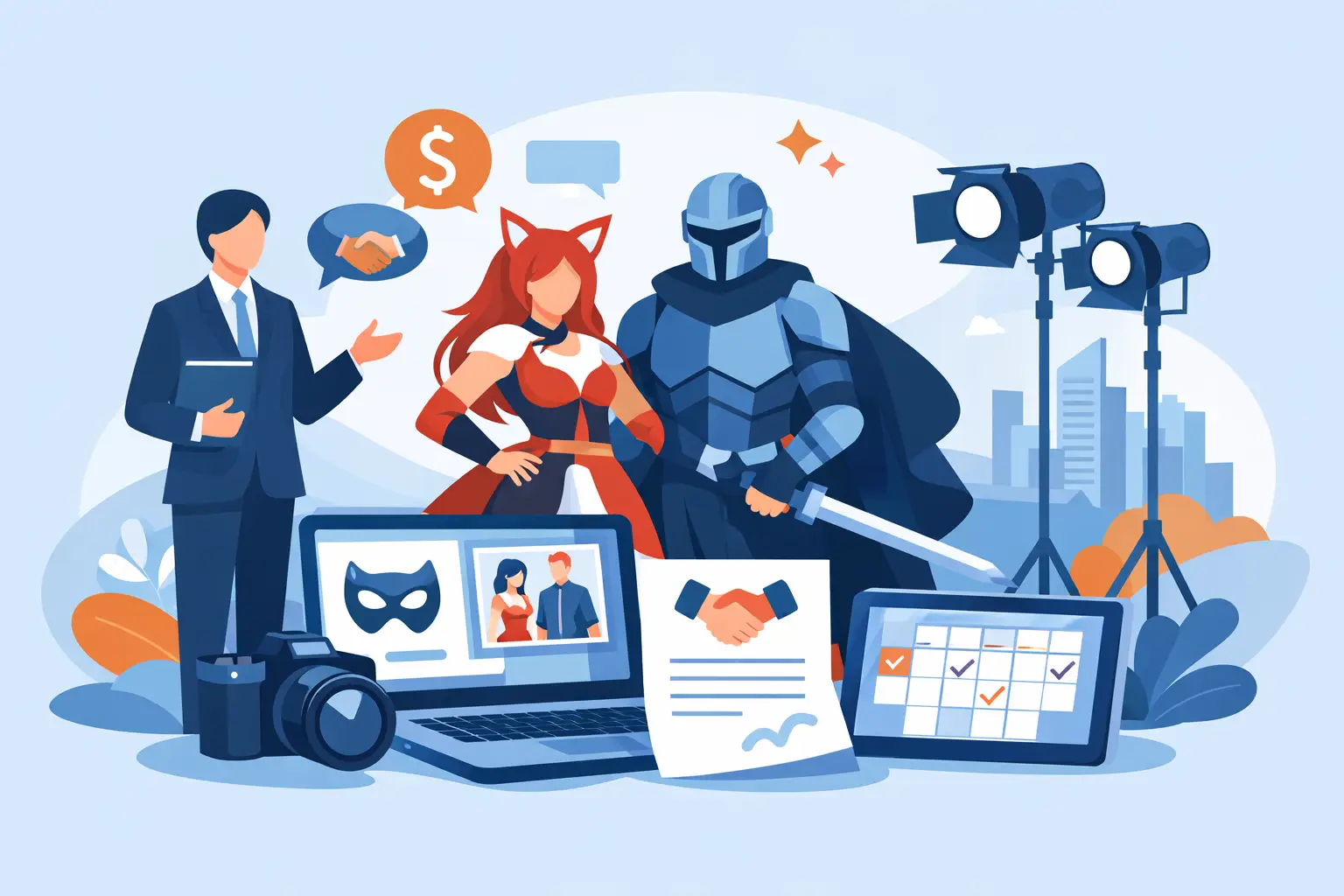
A lot of creators realize they need representation at the exact moment they start getting attention from the wrong people. Suddenly there are brand offers with vague terms, photographers asking for free work “for exposure,” and managers who promise growth but get weirdly evasive when you ask about rates, rights, or payouts. That is where a cosplay agency either proves its value or exposes itself.
For cosplay creators, representation is not just about booking opportunities. It is about protecting a business built on your likeness, your audience, your labor, and a highly specific identity that mainstream agencies often do not understand. If an agency sees cosplay as a quirky add-on to influencer marketing, it is not built for this space. If it understands cosplay as a commercial niche with real buying power, loyal fandom communities, and serious monetization potential, that is a different conversation.
What a cosplay agency is really selling
On paper, an agency sells access, negotiation, and management. In practice, a good cosplay agency sells structure. It creates order around a creator business that can get chaotic fast once content, fan platforms, sponsorships, customs, conventions, licensing questions, and direct messages all start colliding.
That structure matters because cosplay income is rarely linear. One month might be heavy on subscriber growth, another on branded content, another on event appearances, another on custom sets or merchandise. A strong agency does not treat those as disconnected side hustles. It helps position them as parts of one business with a clear brand, real pricing logic, and boundaries that protect the creator.
This is where a lot of agencies miss the mark. They understand generic influencer management, but not subcultural creator management. Cosplay is not interchangeable with fashion modeling or lifestyle content. The audience behaves differently, the content cycle moves differently, and the line between fandom, performance, and commercial work is much more specific.
Why generic talent representation often fails cosplay creators
The problem is not just lack of experience. It is lack of respect for the category.
When a traditional agency looks at a cosplay creator, it may focus only on follower count and surface aesthetics. That misses the real value. A strong cosplay creator has audience trust, niche authority, character versatility, strong visual branding, and a level of community engagement that many broader creators cannot match. Those things translate commercially, but only if the agency knows how to frame them.
A generic rep may push a creator toward safer branding that strips away what made them valuable in the first place. They may encourage a watered-down version of the creator that is easier for mass-market brands to approve. That can lead to short-term deals, but it often weakens long-term positioning.
For alternative creators, that trade-off matters. If your business is built on cosplay, goth, emo, e-girl, or adjacent internet-native aesthetics, becoming more acceptable to everyone can make you less compelling to the people who actually support you.
What fair representation looks like in a cosplay agency
Fair representation is not a vague promise. It should show up in how the agency communicates, negotiates, and sets expectations.
First, transparency should be normal. You should know what percentage the agency takes, what services are included, how deals are sourced, how payment flows, and where decision-making authority sits. If an agency gets slippery when you ask direct business questions, that is not premium. That is a warning sign.
Second, the relationship should be creator-first. That means the agency is there to support your brand, not reshape it into something easier to package. Good management refines positioning. Bad management replaces it.
Third, a fair cosplay agency should understand that boundaries are part of brand value. This is especially important for creators working across subscription platforms, social content, and fan communities. Not every opportunity is worth taking. Not every collaboration fits. Not every piece of exposure is useful. A serious agency helps you say no with confidence, not guilt.
Finally, fair representation includes commercial discipline. That means proper usage terms, better fee negotiation, realistic timelines, and protection against the common pressure tactics creators face when they start earning attention. Professionalism is not about making you more corporate. It is about making sure your work is treated like work.
What services a cosplay agency should offer
A real management partner should do more than forward emails. At minimum, a cosplay agency should help with deal flow, negotiation, pricing guidance, brand positioning, and career planning.
But for creators in this space, the best agencies go further. They help shape monetization across multiple channels rather than treating one platform as the whole business. That includes social growth strategy, platform positioning, campaign fit, content packaging, and long-term income planning. If a creator has momentum on subscription platforms, for example, management should understand how to protect and grow that revenue without compromising the creator’s public brand or audience trust.
This is where specialized agencies have a clear advantage. They know that digital-first alternative creators are not trying to fit into a traditional runway mold. They are building modern media businesses around identity, aesthetics, and direct audience connection. That requires a different management framework.
Choosing a cosplay agency without getting trapped
A lot of creators wait too long to ask hard questions because they are excited to be noticed. That is understandable, but excitement is exactly when bad contracts do the most damage.
Before signing with any cosplay agency, ask how they define success for your category. Ask what kinds of creators they currently understand best. Ask how they handle exclusivity, approvals, commission, and term length. Ask what happens if a deal conflicts with your boundaries or audience. Ask whether they support your full creator business or only the parts they can easily monetize.
Pay attention to tone as much as answers. An agency that respects creators will not act irritated by basic questions. It will expect them.
It also helps to look at whether the agency actually understands subculture as business, not just aesthetics. There is a difference between liking cosplay and knowing how to represent cosplay talent. One is taste. The other is commercial competence.
Why niche expertise matters more than agency size
Big agencies can offer reach, but reach is not always the same as relevance. For cosplay creators, niche expertise often produces better outcomes than scale alone.
A smaller or more specialized agency may have stronger instincts about which deals fit your audience, which brands genuinely align, and which asks are undervaluing your work. It may also understand your audience relationship better. That matters because community trust is one of the most valuable assets a creator has, and it can be damaged quickly by tone-deaf partnerships.
This is also why premium representation does not mean mainstream representation. Premium means clear positioning, strong negotiation, ethical management, and a business model that does not rely on confusing the creator. A specialized agency like Beyond Caption can make sense for talent that wants serious support without being pushed away from the identity that built their audience.
The real standard for a cosplay agency
The real question is not whether an agency can get you deals. Plenty of people can send offers. The question is whether the agency can help you build a stronger business without taking control away from you.
For cosplay creators, that means representation that understands fandom culture, digital monetization, visual branding, and creator boundaries at the same time. It means treating niche aesthetics as commercially valuable, not commercially limiting. It means building a career around your actual identity instead of trying to smooth it into something more conventional.
That standard will not be right for every creator. Some people only want occasional help with outreach. Some are early enough in their journey that they need more consistency before management makes sense. Some may benefit from project-based support before signing anything long-term. It depends on revenue, goals, and how much operational help you really need.
But if you are already getting inbound interest, juggling multiple income streams, or feeling the strain of running your creator business alone, the right representation should feel clarifying. Not controlling. Not vague. Not extractive.
A cosplay agency worth signing with should make your business cleaner, safer, and more profitable while keeping you fully recognizable as yourself. That is the bar, and honestly, it should not be considered a high one. It should be the baseline.