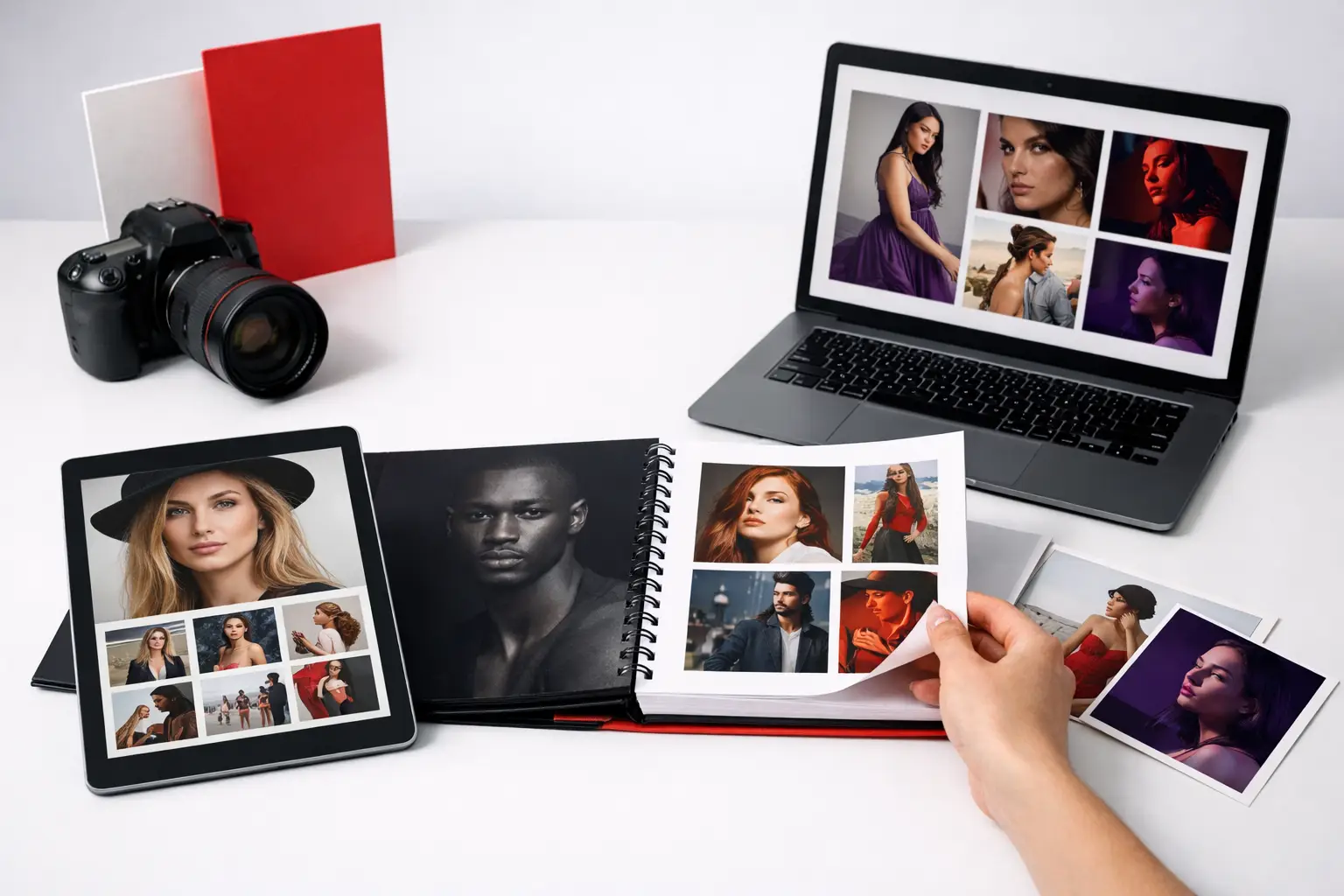
A strong portfolio is not a folder of your favorite selfies. It is proof that your aesthetic can hold attention, translate across formats, and deliver for the right partner. The best alternative model portfolio examples show more than a pretty face or a polished edit. They show a clear identity, commercial range, and the confidence to protect what makes your work recognizable.
For cosplay, e-girl, goth, and emo creators, that distinction matters. Generic model advice often asks you to look more neutral, more flexible, or more mainstream. That can dilute the exact visual world your audience follows you for. Your portfolio should make it easy for brands, photographers, agencies, and potential collaborators to understand your niche without sanding down its edges.
What an Alternative Model Portfolio Needs to Prove
A premium portfolio answers a few business questions quickly. Can this creator carry a concept? Do they understand their visual identity? Can they produce polished content consistently? And does their audience trust the world they have built?
That does not mean every image needs studio-level production. A creator with a highly engaged niche audience may have more commercial value than a conventional model with technically perfect photos and no point of view. The standard is not perfection. It is intentionality.
Build a focused selection rather than trying to show everything you have ever posted. Around 12 to 20 strong images or content stills is usually enough for an initial book. If you also create short-form video, include a separate reel or a small section with video thumbnails and performance context. Keep your paid-platform work and public-facing commercial portfolio distinct where needed. You decide what is available for review, what is private, and what is never part of a pitch.
7 Alternative Model Portfolio Examples With Real Range
1. The Signature Look Set
Start with the look people already associate with you. For a goth creator, that might be dramatic black styling, sharp eyeliner, silver hardware, and a dark editorial setting. For an e-girl, it could be hyper-feminine color, expressive makeup, gaming-inspired details, and direct-to-camera energy.
Include three or four images from one cohesive shoot. Show a close-up, a half-body composition, and a wider frame with enough styling detail to establish the world. This set should make someone understand your identity in seconds. If the images could belong to anyone, they are not doing enough work.
2. The Character-Led Cosplay Set
Cosplay creators need to show both transformation and performance. A character-led set proves you can execute wardrobe, makeup, posing, and emotion as one complete concept. Choose a character that genuinely fits your existing aesthetic rather than selecting one simply because it is trending.
The strongest version includes a recognizable hero image, detail shots that respect the craft, and an image that shows the character’s attitude. Avoid relying only on heavily edited close-ups. Partners need to see how you read in a full frame, how the costume moves, and whether you can keep the character believable across multiple poses.
3. The Clean Commercial Edit
Alternative does not mean visually chaotic. Include one pared-back editorial set with clean lighting, controlled styling, and fewer props. This can be a simple studio shoot, a minimal bedroom set, or an urban location with a focused palette.
This example reassures commercial partners that your look can adapt to a campaign brief while staying unmistakably yours. A goth model does not need to wear beige to look bookable. A cleaner version of black, gray, deep red, or chrome styling can communicate versatility without pretending to be someone else.
4. The Product Integration Set
If you want paid partnerships, show that you can feature a product without making the content feel like an awkward ad. Build a small set around something that naturally belongs in your world: beauty products, hair color, jewelry, gaming gear, fashion accessories, collectibles, or alternative clothing.
The product should be visible, but the image should still feel like your content. Use one clear product-forward frame and one or two lifestyle frames that show it in context. This is where many portfolios fall short. A beautiful image alone does not prove you know how to give a brand usable placement.
5. The Personality-First Creator Set
Your visual identity gets the click. Your personality builds the audience. Add a few images or stills that feel more immediate: laughing between takes, speaking to camera, setting up a cosplay transformation, gaming, getting ready, or sharing a behind-the-scenes moment.
This category matters especially for digital-first creators. A brand may be looking for someone who can make a polished feed post, but it may also need a creator who can carry a story, hold attention on video, and sound credible in their own voice. Do not force a personality that is not yours. Quiet, deadpan, chaotic, romantic, intense, and playful can all be commercially useful when they are authentic.
6. The Community Proof Set
Your audience is part of your value, but follower count alone is a weak portfolio metric. If appropriate, include a concise creator page with platform totals, average views, audience geography, engagement trends, and examples of content formats that perform well.
Use context, not inflated claims. A creator with 40,000 followers and consistently strong saves, comments, and paid conversion can be a better fit than an account with a much larger but passive audience. If your community responds especially well to makeup tutorials, cosplay reveals, try-on content, gaming streams, or storytelling, say so. That insight helps partners pitch campaigns that actually fit.
7. The Professional Collaboration Set
One set should show that you can work within a team. This might be an editorial shoot with a photographer, makeup artist, stylist, designer, or cosplay maker. Credit collaborators clearly in the full portfolio version, and only use work you have permission to share.
The purpose is not to look expensive for the sake of it. It is to demonstrate reliability. A polished collaboration signals that you can take direction, arrive prepared, communicate professionally, and contribute to a larger production. Those are the details that turn a one-off opportunity into repeat work.
How to Arrange Your Portfolio So It Gets Read
Lead with your signature image, not the newest image. First impressions should establish your strongest aesthetic immediately. Follow it with a cohesive set, then introduce range gradually: character work, commercial styling, product integration, personality, and professional collaboration.
Treat every image as an answer to a practical question. What does this show that the last image did not? If the answer is nothing, remove it. Repetition can make even a great portfolio feel less premium.
Keep captions brief and useful. Include the concept, your role, relevant collaborators, and any performance result worth mentioning. For example, a creator campaign that produced high saves or strong click-through interest is more persuasive than vague language about loving a product. Never share private earnings, personal data, or paid-platform analytics unless there is a specific business reason and a trusted recipient.
Common Portfolio Mistakes Alternative Creators Can Avoid
The biggest mistake is trying to prove range by abandoning your identity. You do not need a corporate headshot, a beachwear image, and a high-fashion neutral look if none of that matches your work. Range is the ability to deliver different concepts inside a recognizable point of view.
Another mistake is relying too heavily on filters, AI-generated backdrops, or edits that obscure your real features and proportions. Creative editing has a place in alternative aesthetics, especially in fantasy and cosplay work. But your portfolio should still make it clear what a collaborator can expect on set and on camera.
Finally, do not confuse access with professionalism. You can be warm with your audience and still set boundaries around usage rights, exclusivity, rates, image approval, and content categories. A creator-first approach means your portfolio works for you, not the other way around.
Beyond Caption believes premium representation starts with a creator who can articulate their value without making themselves smaller. Build a portfolio that gives the right people a clear yes, and gives everyone else a clear understanding that your aesthetic, audience, and boundaries are not up for negotiation.