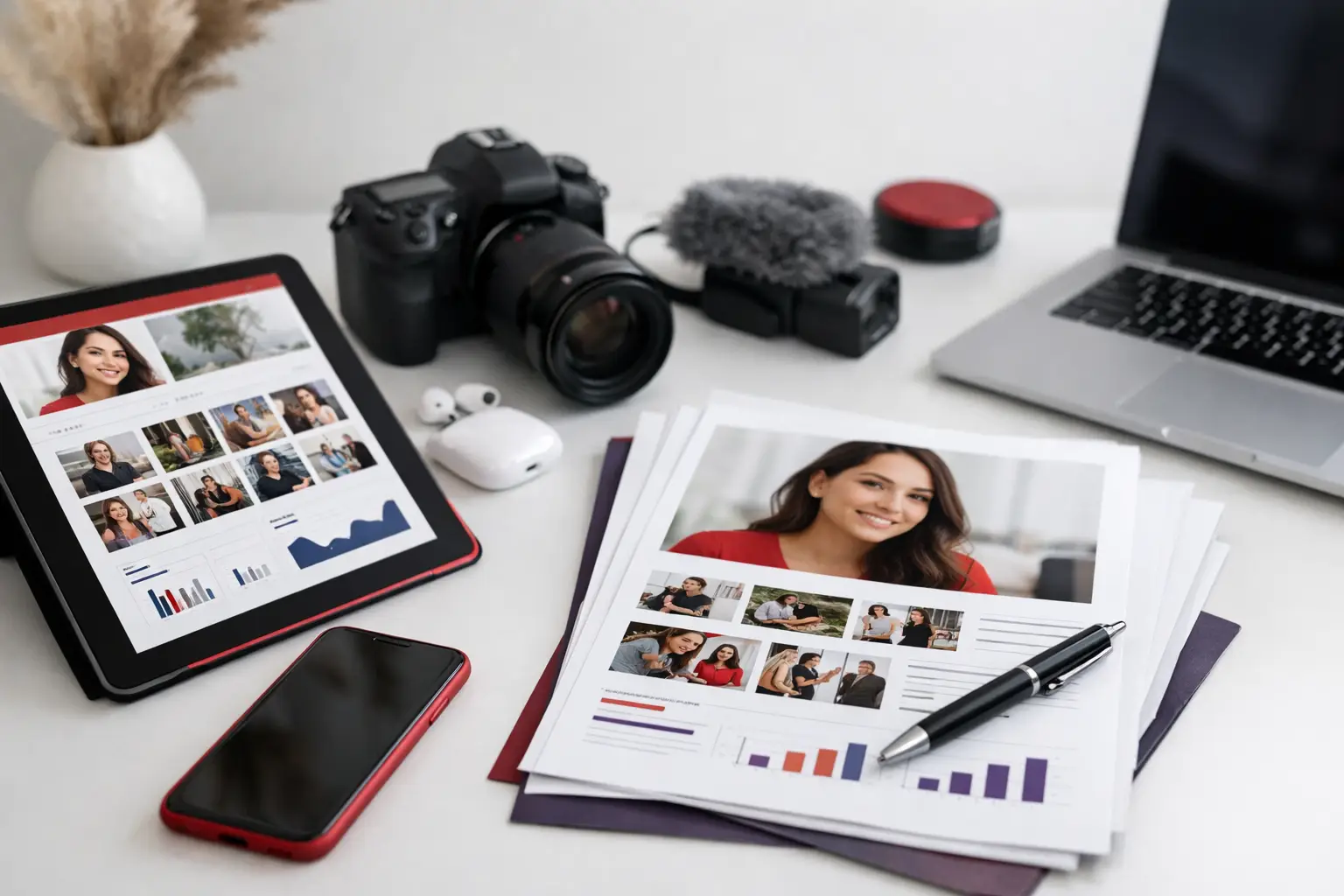
A brand should understand your value before it asks for your rates, changes your concept, or mistakes your goth, cosplay, e-girl, or emo aesthetic for a costume it can direct. That is what a strong media kit does. If you are learning how to build a creator media kit, think of it less as a résumé and more as a premium, controlled introduction to your business.
Your look gets attention. Your media kit shows that you can turn attention into a considered partnership, a clear campaign deliverable, and measurable results. It gives the right brands enough information to book you while keeping you in control of your image, your boundaries, and your audience relationship.
Start With Positioning, Not a Pretty Template
A polished design cannot compensate for unclear positioning. Before you choose fonts, images, or a Canva layout, decide what you want a potential partner to understand about you in one glance.
Your positioning should connect three things: your visual identity, the community you speak to, and the commercial value you offer. “Alternative creator” is a starting point, not a full pitch. “Cosplay creator known for cinematic character transformations and high-engagement gaming content” tells a brand much more. So does “goth beauty creator with a loyal audience interested in dark glam, music, and body-positive self-expression.”
Be specific without flattening yourself into a trend label. A creator built around anime cosplay may also be a skilled makeup artist, gamer, or storyteller. An e-girl creator may have a strong point of view on fashion, tech, and internet culture. Your media kit should make those layers easy to see.
Write a short bio of 50 to 90 words in the first person or a confident third person. Lead with what makes your work distinctive, then name the platforms or content formats where you are strongest. Avoid vague claims such as “passionate content creator.” Brands are not booking passion. They are booking a recognizable creator with a relevant audience and a clear creative lane.
What to Include in a Creator Media Kit
A media kit is most effective when it answers the practical questions a brand manager, agency, or platform team will ask before reaching out. Keep it focused. A five- to eight-page PDF is usually enough for most creators, although a one-page version can work well for quick outreach.
Include these core sections:
- Your name, handle, and contact details. Use the same professional name and primary handles you use publicly. Add a business email rather than relying on direct messages.
- A concise creator bio and niche statement. Explain your aesthetic, content pillars, and the kind of audience connection you have built.
- Platform metrics. Show followers, average views, engagement rate when meaningful, audience demographics, top countries, and recent growth. Use dates so the numbers have context.
- Your audience profile. Go beyond age and gender when you can. Share interests, buying behavior, fandom overlap, and the reasons your audience trusts your recommendations.
- Content examples. Feature your best campaign-ready visuals, not simply your most liked posts. Choose images that show your range while staying consistent with your identity.
- Past partnerships or proof of performance. Include brand names only where you have permission. Otherwise, describe the category, deliverables, and outcome without disclosing confidential details.
- Available services and formats. This may include short-form video, photo sets, livestream integrations, event appearances, product launches, UGC, affiliate campaigns, or licensed usage.
- A clear next step. Tell brands how to contact you or your representative for rates, concepts, and availability.
You do not need every metric from every platform. Too much data can make a media kit feel unfocused. Select the numbers that support the type of work you want more of. If your Reels consistently outperform your photo posts, lead with Reels. If your paid creator platform has an unusually loyal subscriber base, explain the retention or engagement in a privacy-conscious, professional way.
Use Metrics That Show Influence, Not Just Reach
Follower count is useful, but it is rarely the whole story. A creator with 40,000 highly engaged followers in a defined alt-fashion community can be more valuable to the right brand than someone with 400,000 broad, low-intent followers.
Show average views for recent videos, story views, saves, shares, comments, link clicks, or conversion results when available. For sponsored work, performance should be presented honestly. A single viral post is not a baseline. Use an average or a representative range from the last 30 to 90 days.
Audience screenshots can add credibility, but organize them cleanly and remove any sensitive information. If your audience is split across the United States and Europe, say so. If a large share follows you for cosplay tutorials, alternative beauty, gaming, or fashion styling, that context helps a partner assess fit.
For adult creators, professional presentation matters even more. You can communicate the strength of your paid community without including explicit material, private subscriber data, or anything that violates a prospective partner’s platform standards. Focus on your content categories, community loyalty, posting consistency, and the campaign formats you can deliver safely and compliantly.
Curate Images Like a Brand Would
Your visual examples should make someone want to build a campaign around you. Use high-resolution images with good lighting, intentional styling, and enough variety to show your range. That does not mean stripping out your identity to look “brand safe.” It means choosing work that is unmistakably yours and professionally executed.
A gothic creator can include dramatic black-and-white portraits, dark glam close-ups, and editorial styling. A cosplay creator might show a transformation sequence, a detailed costume shot, and a character-led video still. The goal is to demonstrate quality, consistency, and creative direction.
Avoid filling the document with too many selfies, reposted memes, or screenshots that are difficult to read. Three excellent examples create more confidence than 15 average ones. If you have worked with photographers, makeup artists, or designers, crediting collaborators can be appropriate, but keep the focus on the creator brands are hiring: you.
Set Boundaries Before a Brand Sets Them for You
Your media kit should attract opportunities, not invite unlimited access. Be clear about the content you offer, the platforms you work on, and the types of partnerships that fit your audience. You do not need to publish every rule or rate in the document, but you should not leave your professional boundaries ambiguous.
For example, you might state that custom concepts, exclusivity, paid usage, whitelisting, rush delivery, travel, and raw footage are quoted separately. This signals that your work has structure and commercial value. It also prevents a common problem: a brand assuming a single post includes indefinite rights to reuse your face, content, or likeness.
If you do not accept certain categories, say so with a short line or handle it during qualification. It depends on your comfort level and the kinds of inbound requests you receive. The right approach is the one that protects your values without turning your kit into a long list of restrictions.
Keep Rates Flexible, but Never Hide Your Value
Whether to include a rate card depends on your business model. A public starting rate can filter out low-budget inquiries and save time. On the other hand, creators with varied deliverables, licensing needs, or audience segments may be better served by custom quotes.
If you list prices, use “starting at” language and specify what is included. If you do not, add a line such as “Rates and usage are tailored to campaign scope.” Do not apologize for charging professionally. Your audience, creative labor, production time, and usage rights all have value.
Fair representation should make this process clearer, not more confusing. A creator-first manager can help evaluate briefs, negotiate licensing, and make sure the deal reflects both your reach and your niche authority. Beyond Caption works from that principle: alternative talent deserves premium opportunities without being pressured into generic branding or unclear terms.
Review Your Kit Every Quarter
A media kit is a living sales asset, not a file you make once and forget. Refresh your metrics quarterly, replace outdated visuals, and add new proof when a campaign performs well. Update it sooner after a major growth moment, a platform shift, or a change in the partnerships you want to pursue.
Save a PDF with a simple, professional file name, such as “Name_CreatorMediaKit_2026.” Check that every handle, email address, statistic, and image looks correct on both desktop and mobile. Small errors create unnecessary doubt when you are asking a brand to trust you with its campaign.
The best media kit does not make you look like everyone else. It makes the right partner see exactly why your point of view, your community, and your creative standards are worth paying for.