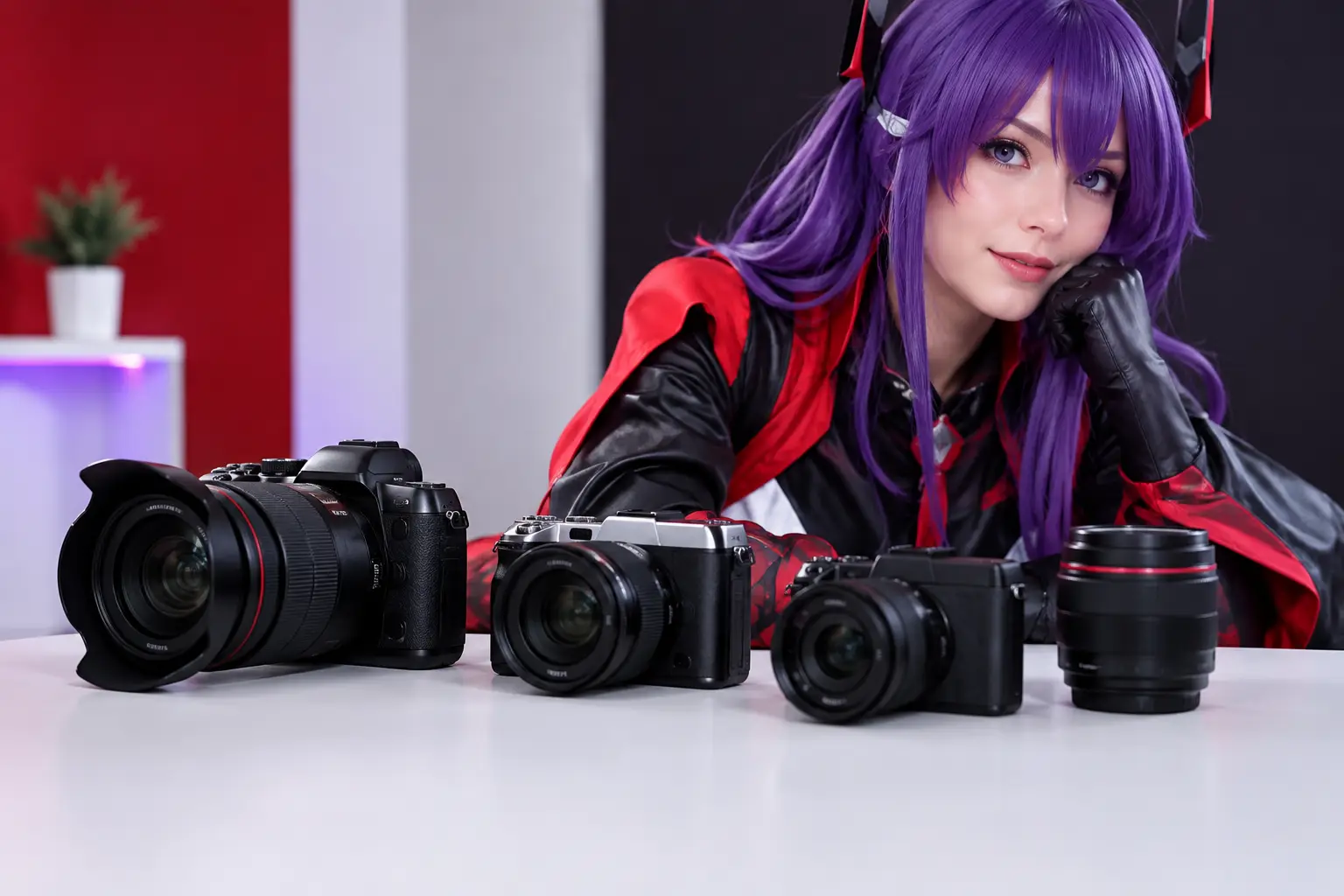
A perfect wig, intricate armor, and four hours of makeup can disappear under bad autofocus and flat indoor lighting. For cosplay creators, a camera is not just a gear purchase. It is part of the production value behind your social presence, paid sets, brand work, and the visual identity that makes your page recognizable.
The best cameras for cosplay creators balance sharp detail with speed, especially when you are shooting elaborate textures, filming transition reels, or working under convention hall lighting. The right choice depends less on a spec-sheet battle and more on how you actually create: solo in a bedroom studio, with a photographer outdoors, at events, or across all of the above.
What Cosplay Creators Need From a Camera
Cosplay is demanding on camera gear. Metallic props, lace, glitter, colored contacts, dark gothic looks, neon e-girl setups, and fast-moving convention footage all expose weak points in a camera system. You need reliable eye autofocus, good low-light performance, and enough color control to keep skin tones and costume colors intentional rather than overly processed.
For most creators, a mirrorless camera is the clear starting point. They are lighter than traditional DSLRs, offer excellent autofocus, and make it easier to preview exposure before you shoot. A flip-out screen matters if you shoot yourself. So does a microphone input if video, voiceovers, behind-the-scenes content, or longer-form creator work is part of your plan.
Do not buy based on megapixels alone. A 24-megapixel camera with strong autofocus and a good lens will usually create more usable content than a high-resolution body that struggles in dim spaces. Your lighting, lens choice, and editing workflow will shape the final image just as much as the camera body.
The Best Cameras for Cosplay Creators
Sony a6700: Best Overall for Hybrid Creators
The Sony a6700 is a strong all-around choice for creators who need polished photos and serious video from one compact body. Its autofocus is exceptionally dependable for face and eye tracking, which is valuable when you are posing alone, moving through a transition, or working with a photographer who needs to shoot quickly.
It captures detailed stills, handles indoor lighting well for an APS-C camera, and offers advanced video features without forcing you into a full-frame price bracket. The compact size also makes it practical for conventions, travel shoots, and crowded locations.
The trade-off is Sony’s menu system, which can feel less intuitive than Canon’s for new users. Sony lenses also range from affordable to premium very quickly. Still, if content creation is a major revenue path rather than an occasional hobby, the a6700 is one of the smartest long-term investments available.
Canon EOS R8: Best Full-Frame Value for Portraits
If your priority is high-end portrait work, cinematic depth, and clean low-light images, the Canon EOS R8 deserves serious attention. Its full-frame sensor creates a more editorial look with less effort, particularly when you are shooting detailed close-ups, dramatic gothic styling, or evening outdoor sets.
Canon’s autofocus is fast and easy to trust, while its color science tends to produce flattering skin tones straight out of camera. That can reduce editing time when you are managing a busy posting schedule or delivering content on a deadline.
The R8 is not built around long battery life, and it lacks in-body image stabilization. Those limitations matter if you film handheld for extended periods. For controlled shoots, however, it delivers premium image quality at a comparatively accessible full-frame price.
Fujifilm X-S20: Best for Distinctive Color and Style
Fujifilm has a loyal following for a reason. The X-S20 produces beautiful color straight from camera, and its film simulations can help you build a consistent visual language without spending hours adjusting every image. That makes it especially compelling for creators whose feeds lean vintage, soft, dreamy, dark romantic, or intentionally stylized.
It also has a flip-out screen, strong battery life, in-body image stabilization, and capable video features. For solo creators, that combination is practical. You can set it on a tripod, frame your shot, and get stable footage without needing a complicated rig.
Its autofocus is good, but Sony and Canon still have an edge in difficult motion or low-contrast scenes. If you want the most clinical autofocus performance, choose one of those systems. If your brand is driven by mood, color, and a recognizable aesthetic, Fujifilm may fit better.
Canon EOS R50 V: Best Accessible Video-First Option
The Canon EOS R50 V is a compelling entry point for creators who are building around vertical video, tutorials, cosplay transformations, and social-first campaigns. It is designed with video workflow in mind, with an approachable interface and creator-friendly controls that make it less intimidating than more advanced bodies.
For short-form content, it gives you far more control than a phone while keeping the setup manageable. Pair it with a bright lens and a small key light, and it can produce clean, professional clips for reels, TikToks, and subscriber content.
It is not the camera to choose for major print work or highly demanding low-light photography. But for a creator who needs to post consistently before they need a cinema rig, it is a sensible, budget-aware move.
Nikon Zf: Best for Low-Light Editorial Energy
The Nikon Zf is for creators who want their camera to feel as considered as their wardrobe. Its retro design is genuinely striking, but the reason to buy it is the image quality. The full-frame sensor handles low light beautifully, making it a strong option for moody interiors, nighttime city shoots, dark fantasy concepts, and rich black-heavy styling.
It also offers excellent stabilization and dependable subject detection. The controls are more tactile than many modern cameras, which some photographers love and others find slower. It is not the lightest choice for convention days, but it rewards creators who want a more editorial finish in camera.
Your Lens Matters More Than the Upgrade Cycle
A camera body gets attention. A lens changes the image. If you can only make one smart addition after buying a camera, choose a bright prime lens.
For full-body cosplay portraits in tighter spaces, a 24mm or 35mm lens is useful. For flattering portraits and detail shots, a 50mm is a reliable standard. An 85mm creates more separation between you and the background, but it requires more room to work. On APS-C cameras, remember that lenses appear tighter than they do on full-frame bodies, so a 35mm can function more like a classic 50mm portrait perspective.
Look for a lens with a wide aperture, ideally f/1.8 or f/2.8. It lets in more light and gives you softer backgrounds, which can turn a bedroom corner or basic hotel room into a more intentional set. The catch is that extremely shallow depth of field can make focus unforgiving, particularly with wigs, masks, props, or dynamic poses. Use it deliberately, not automatically.
Build a Setup That Protects Your Time
A premium camera cannot fix rushed production. Before upgrading bodies, make sure your setup includes a stable tripod, a fast memory card, and lighting you can control. One soft key light or a window with diffusion will improve your content more than chasing another minor camera spec.
For self-shooting, use your camera’s companion app or a remote trigger. It gives you room to pose naturally instead of sprinting back to the camera after every frame. For paid content, create a repeatable workflow: shoot, back up files immediately, select, edit, and organize by look or campaign. Your archive is part of your business infrastructure.
At conventions, protect your gear. Keep a small bag close, carry a spare battery, and ask before filming other cosplayers in a way that makes them identifiable. Strong creator brands are built on respect as much as aesthetics.
Choose for the Creator You Are Becoming
The best camera is the one that supports consistent output without making your process harder. Choose the Sony a6700 for the strongest hybrid performance, the Canon R8 for full-frame portrait value, the Fujifilm X-S20 for distinctive color, the Canon R50 V for accessible video, or the Nikon Zf for low-light editorial work.
At Beyond Caption, we see that visual quality can strengthen a creator’s positioning, but polish should never erase personality. Buy the camera that gives your concepts room to land, then spend the rest of your energy making work that could only come from you.