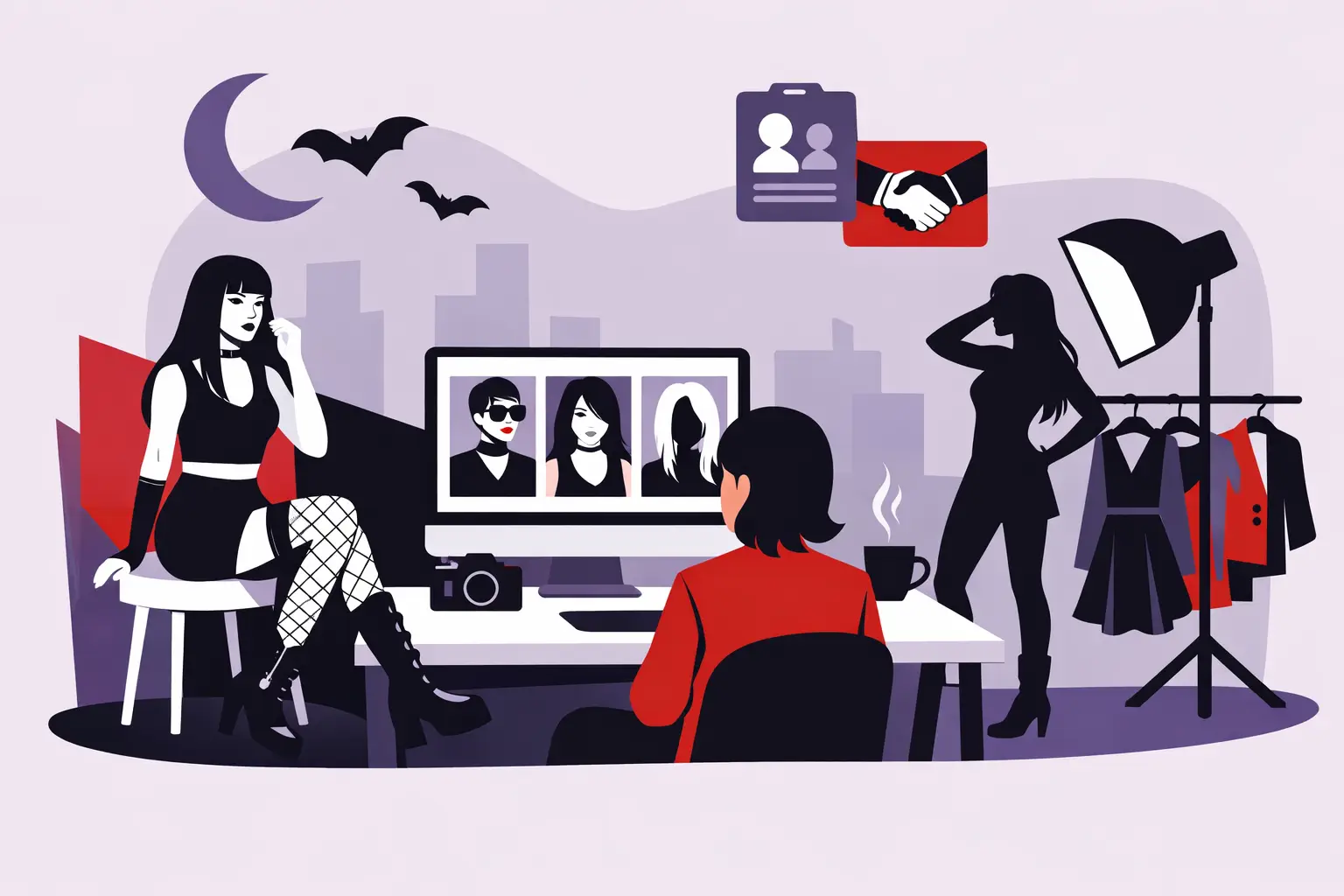
Most creators know the feeling: people love the look, engage with the content, and borrow the aesthetic, but the second money enters the conversation, the room gets weird. Suddenly your identity is treated like a gimmick, your audience is reduced to a niche number, or your rates get framed as unrealistic. That is exactly why a goth model agency matters when it is built correctly.
For goth creators, representation is not just about booking work. It is about protecting a brand that took years to shape, understanding the commercial value of a distinct visual identity, and building income without stripping away the edge that made people pay attention in the first place. A generic agency often sees goth as a styling choice. A specialist sees it as positioning, audience loyalty, and market differentiation.
Why a goth model agency exists in the first place
The mainstream model of representation was not built for digitally native alternative talent. It was built around fitting talent into existing boxes, then selling access to those boxes. That structure can still work for some careers, but it often fails creators whose value comes from subculture fluency, strong audience trust, and a personal brand that does not translate neatly into conventional fashion language.
A goth creator is rarely selling just images. They are building an atmosphere, a point of view, and a recognizable online presence. That presence can monetize across brand partnerships, subscriptions, social content, licensing, and personal brand extensions. If an agency does not understand that ecosystem, it will usually undervalue the talent or push them toward opportunities that dilute the brand.
A serious goth model agency should know the difference between exposure and leverage. It should understand why a creator with a highly specific audience may be more commercially valuable than someone with broader but weaker engagement. It should also understand that long-term career growth often comes from sharper positioning, not softer branding.
What makes a good goth model agency different
The real difference is not black clothing in a mood board or a social feed full of dark visuals. It is operational. A strong agency knows how to translate an alternative identity into business strategy without making it feel sanitized.
That starts with representation that is creator-first. Transparent deal structures, clear communication, realistic growth planning, and respect for boundaries are not nice extras. They are the baseline. Too many creators enter management because they want help, then end up losing visibility into negotiations, pricing, content direction, or client expectations. That is not support. That is dependency dressed up as professionalism.
A good agency should also be fluent in internet culture, not just fashion language. Goth creators today are often digital-first personalities, not traditional runway models waiting for castings. Their value may sit in audience conversion, subscription retention, visual consistency, or cross-platform influence. Management needs to reflect that reality.
There is also a commercial side many creators underestimate at first. The right agency does not only pitch you. It helps shape your positioning so the right buyers understand you immediately. That can affect everything from your rates to the kind of campaigns you attract. If your brand story is vague, people fill in the blanks for you, and they rarely do it in your favor.
A goth model agency should protect your image, not flatten it
One of the biggest red flags in representation is pressure to become more marketable by becoming less specific. In practice, that usually means toning down what made the creator stand out. Softer styling, safer messaging, more generic content, broader appeal. It sounds strategic. Often it is just lazy.
Distinctive aesthetics are not a problem to solve. They are often the product. Brands, platforms, and audiences respond to creators who feel intentional. Goth works commercially because it communicates something immediately - mood, confidence, taste, intensity, identity. When that is authentic and well-managed, it is not limiting. It is memorable.
That does not mean every opportunity is a fit. It means the filtering process should be smarter. A strong agency helps you say no to the wrong work faster, so you have more room for the right work. It should protect your positioning, not trade it away for short-term fees that confuse your audience or weaken your value over time.
This matters even more for creators working across subscription platforms and social channels. If management treats one side of your brand as acceptable and the other as something to hide, the strategy breaks. Your audience sees the disconnect. So do serious buyers.
The business side creators should expect
A goth model agency should make the business clearer, not more mysterious. Creators do not need more gatekeeping. They need better infrastructure.
That includes deal negotiation, rate guidance, brand outreach, scheduling support, and positioning advice. It may also include content strategy, platform growth planning, and help navigating monetization models tied to audience loyalty rather than one-off bookings. The exact mix depends on the creator.
A newer model may need more support building an offer, tightening visual consistency, and understanding what kinds of partnerships fit their image. A more established creator may need sharper negotiation, better inbound filtering, and help expanding beyond reactive opportunities. Good management adapts to that stage difference instead of offering the same script to everyone.
There is also a trust issue here that should be addressed directly. Alternative creators have plenty of reasons to be cautious about representation. Some have been underpaid, pushed into poor-fit collaborations, or locked into opaque commission arrangements. Fair management is not just about being nice to talent. It is about creating conditions where talent can make stronger decisions because they actually know what is happening.
That is one reason a premium, transparent model matters. Professional representation should create leverage, clarity, and better revenue. If it only creates distance between you and your business, it is not doing its job.
Not every goth creator needs an agency yet
This is where nuance matters. Signing with a goth model agency is not automatically the next right move just because your content is growing.
If your brand is still inconsistent, your niche is not clear, or you have not figured out how you want to monetize attention, management may be premature. An agency can amplify direction, but it cannot invent one for you out of thin air. Creators who get the most value from representation usually already have traction, audience signals, or a clear aesthetic identity that can be developed into stronger commercial positioning.
That said, waiting too long can create its own problems. Once opportunities start arriving regularly, weak deal handling gets expensive fast. Underpricing becomes a habit. Misaligned partnerships muddy your image. Admin work eats time that should go toward content and growth.
The right timing usually comes down to one question: are you losing money or momentum because you are handling everything alone? If the answer is yes, outside support may stop being optional.
How to tell if a goth model agency is actually credible
Look past the branding. Plenty of companies know how to look alternative online. That is not the same as understanding creator management.
A credible agency should be able to explain how it supports pricing, partnerships, positioning, and long-term brand development. It should speak clearly about commission, scope, and expectations. It should understand that creator careers are not built by forcing everyone into the same revenue model.
It should also respect the fact that your audience relationship is an asset. If management treats your community like a number on a media sheet instead of the foundation of your business, that is a problem. For goth and other alternative creators, audience trust is often what makes monetization durable.
The best agencies are not trying to make you legible to the mainstream by sanding off your identity. They are making your value legible to buyers who are ready to pay for specificity. That is a very different approach, and it tends to produce stronger careers.
For creators who want structure without losing control, that difference is everything. Agencies like Beyond Caption exist because alternative talent deserves representation that is as sharp as the brand they built. Not watered down. Not exploited. Properly managed.
If you are building a goth brand with real audience pull, do not ask whether you are too niche for representation. Ask whether the representation in front of you is specific enough to deserve you.