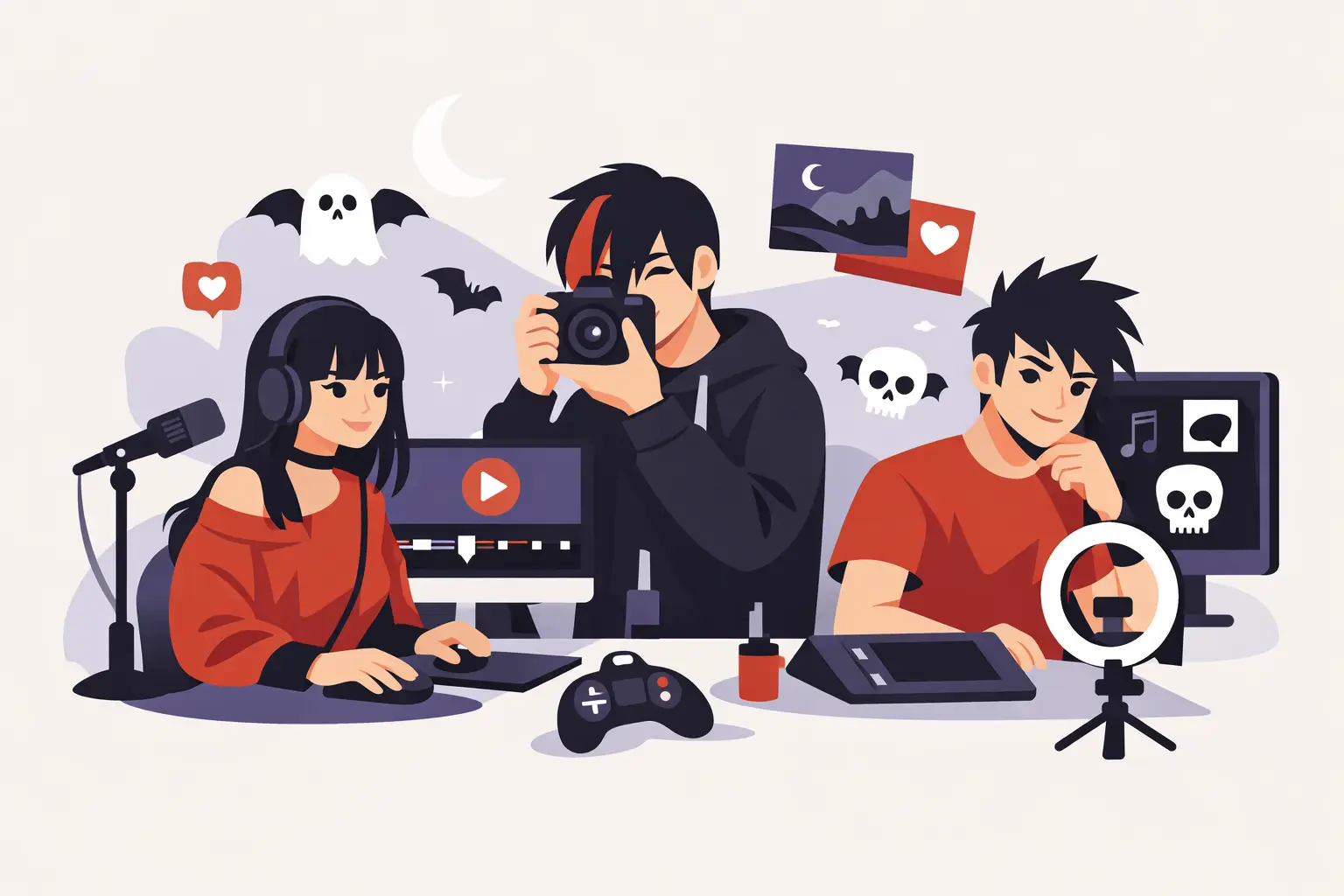
If an emo creator agency starts by trying to tone you down, widen your appeal, or make you look less like yourself, it has already missed the point.
Creators in emo, goth, cosplay, and adjacent alternative spaces do not struggle because their identity is too specific. More often, the problem is the opposite. Generic agencies do not know how to position specificity as value. They treat subculture like a phase, a costume, or a niche to flatten for brand safety. That approach costs creators money, leverage, and trust.
A strong agency in this space should do something very different. It should build commercial structure around your existing identity, not dilute it. If your look, audience, and content language are what make people care, your representation should protect that while turning it into stable income.
Why an emo creator agency exists in the first place
The mainstream talent model was not built for internet-native alternative creators. It was built around broad market appeal, conventional beauty standards, and campaigns that reward predictability. That model can work for some talent. It is often a poor fit for creators whose value comes from a clear aesthetic point of view and a highly engaged subcultural audience.
Emo creators are not simply posting content in black eyeliner. They are building identity-led brands with recognizable visual codes, strong audience loyalty, and often a direct monetization model through platforms like OnlyFans. That changes what representation needs to look like.
An emo creator agency should understand that your audience is not incidental. It is the business. The way you style, pose, caption, edit, and communicate creates a world people buy into. A manager who does not understand that world will make bad decisions fast, from mismatched partnerships to weak pricing to tone-deaf positioning.
This is why specialization matters. A niche agency is not useful because it knows the labels. It is useful because it understands what those labels mean commercially.
What a good emo creator agency actually handles
The obvious answer is brand deals, but that is only one part of the job. For alternative creators, especially those monetizing through direct-to-fan platforms, management should cover the full business layer behind the persona.
That means pricing your time and content correctly, negotiating usage rights without giving away too much, organizing inbound opportunities, and helping shape a brand image that can scale. It also means protecting you from the quiet ways creators lose money - unclear rev splits, vague deliverables, unpaid extras, exclusivity terms that limit future work, and "exposure" deals dressed up as opportunities.
On OnlyFans in particular, representation should be practical. You need support that understands retention, positioning, campaign timing, fan conversion, and content strategy without trying to control your identity or relationship with your audience. Premium management is not about taking over. It is about creating structure where most creators are currently forced to improvise.
The difference shows up quickly. A creator-first agency helps you operate like a business while still feeling like yourself online.
Strategy matters more than aesthetics alone
A polished look is not enough. Plenty of creators have a strong visual identity but weak commercial positioning. They post consistently, get attention, and still undercharge, miss partnership fit, or plateau because no one has translated their brand into a long-term model.
That is where management earns its place. A serious agency should know how to define what kind of emo creator you are in market terms, not just visual ones. Are you dark romantic, pop-punk nostalgic, soft emo, hyper-stylized alt, cosplay crossover, or something more hybrid? Different lanes attract different audiences, price points, and campaign fits.
This kind of positioning is subtle but valuable. It affects who approaches you, what they expect, how you package your content, and where your growth ceiling sits. Without it, creators often end up with attention but no structure behind it.
Fair representation is not a bonus
Alternative creators have good reason to be cautious around agencies. Too many management setups are vague on commissions, fuzzy on deliverables, and overly controlling once money starts moving.
That is why transparency should not be treated like a nice extra. It is the baseline.
A fair emo creator agency should be clear about what it handles, what percentage it takes, when it gets paid, and what remains under your control. If representation makes your business feel harder to understand, it is not premium. It is a risk.
The best creator relationships are built on alignment. The agency brings infrastructure, negotiation, and growth strategy. The creator keeps authorship over identity, audience connection, and creative direction. There can be collaboration, feedback, and commercial planning, but there should not be confusion about ownership.
That matters even more in alternative spaces, where identity is not just branding. It is personal, cultural, and often tied to community belonging. Agencies that fail to respect that tend to push creators toward safer, flatter versions of themselves. That may look more marketable on paper. In practice, it often weakens the exact thing that made the creator valuable.
The problem with mainstream agency logic
Many traditional agencies still evaluate talent through old filters. They look for broad polish, advertiser comfort, and easy categorization. If you sit outside that system, they may either ignore your value or try to repackage you into something more legible.
For emo creators, that can show up in subtle ways. You may be encouraged to soften styling, shift tone, change content mix, or chase audiences that are larger but less invested. None of that is automatically wrong. Sometimes evolution is smart. But when those changes are made to satisfy agency assumptions rather than improve your business, they usually backfire.
A creator-first alternative agency works from a different premise. It assumes your niche is an asset. The goal is not to erase your edge. The goal is to make that edge commercially sustainable.
That approach tends to produce better outcomes because it builds on what already works. Strong fan loyalty. Distinct visual identity. High recognition. Better conversion. More trust. Those are not side benefits. They are the core of your value.
What creators should look for before signing
If you are considering an emo creator agency, pay attention to how it talks about talent. The language tells you a lot. If every creator sounds interchangeable, or if the agency only knows how to talk in generic influencer terms, that is usually a bad sign.
Look for specificity. Look for commercial understanding. Look for a team that can explain how it would help you grow income without sanding down your identity.
You should also pay attention to process. Good management is organized. It communicates clearly, sets expectations early, and does not hide behind industry vagueness. If basic questions about terms, strategy, platform approach, or creative control are hard to answer before you sign, they will not get easier afterward.
And yes, results matter. But fit matters too. The right agency relationship should make you feel more protected, more focused, and more professionally positioned. Not more managed in the worst sense of the word.
For creators in alternative spaces, premium representation is not about looking more mainstream. It is about being taken seriously on your own terms. That is the real job. An agency like Beyond Caption understands that the strongest creator brands are not built by smoothing out what makes them distinct. They grow when the business side finally catches up to the identity side.
If you have built an audience around a real point of view, do not hand it over to anyone who sees that as something to fix. The right support should make your brand sharper, your deals fairer, and your growth easier to trust.